 6145 N Northwest Hwy
Radiofrequency Ablation
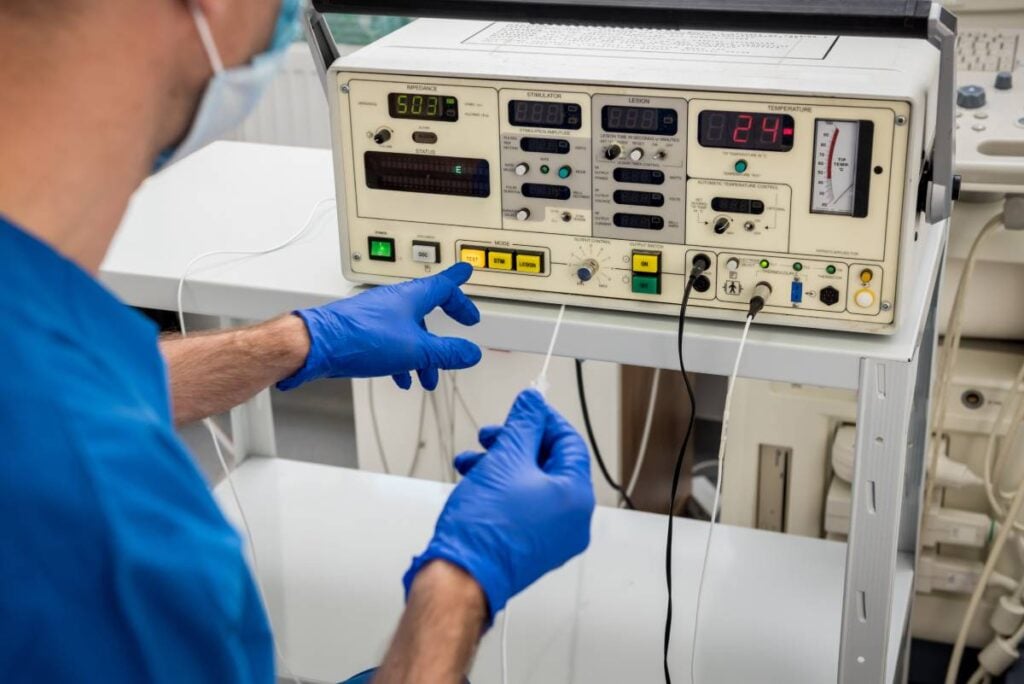
- RFA
What is Radiofrequency Ablation?
Why Is It Done?
- Pain Conditions
What Types of Pain Conditions Can Be Helped With RFA?
- Peripheral nerve pain
- Certain cancer-related pain
- Heart rhythm problems
- Arthritis of the spine
- Chronic neck and back pain
- Sacroiliac joint pain
- Trigeminal neuralgia
Find out if Radio Frequency Ablation Is Right for You
Schedule an Appointment

- Symptoms
Who Are the Candidates for Radiofrequency Ablation?
Ideal candidates for RFA include patients with chronic pain lasting over six months who have not found relief with conservative measures such as medications, physical therapy, or chiropractic care. This procedure is especially beneficial for patients suffering from arthritis, joint pain, and spinal conditions. Our team, led by Dr. Rock, carefully evaluates each patient to determine the best course of action.
Preparation for Radiofrequency Ablation
- Arrange for someone to drive you home post-procedure.
- Do not eat or drink after midnight before the procedure.
- Bring all medications with you to the appointment.
- Consult your doctor about any medication adjustments, especially for diabetes and blood-thinning medications.
- See If This Applies to Your Situation
Who Can Benefit from RFA?
Radiofrequency ablation (RFA) is often recommended for patients with chronic pain lasting more than six months who haven’t found relief from conservative treatments like medication, physical therapy, or chiropractic care.
RFA can significantly reduce pain and improve quality of life, especially when it targets pain caused by specific nerve-related or spinal conditions, such as:
- Peripheral nerve pain
- Certain cancer-related pain
- Heart rhythm problems
- Arthritis of the spine
- Chronic neck and back pain
- Sacroiliac joint pain
- Trigeminal neuralgia
- Procedure
RFA Procedure Overview
Preparation for Radiofrequency Ablation
- Arrange for someone to drive you home post-procedure.
- Do not eat or drink after midnight before the procedure.
- Bring all medications with you to the appointment.
- Consult your doctor about any medication adjustments, especially for diabetes and blood-thinning medications.

RFA Pain Relief and Duration
- FAQs
Frequently Asked Questions
No, RFA is a minimally invasive procedure, not a surgery. It involves using a needle and electrode to target nerves.
The procedure usually takes about 30 to 90 minutes, depending on the area being treated.
Pain relief can last from nine to twelve months, with some patients experiencing relief for several years.
RFA can treat chronic pain in the back, neck, hips, knees, shoulders, and sacroiliac joints.
Patients with chronic pain lasting over six months who haven’t found relief with other treatments are ideal candidates.
- Temporary increase in pain
- Bruising at the injection site
- Localized numbness or weakness
- Infection at the injection site
